

A familiar image can feel permanent — until someone steps into it and changes who gets to matter. In “Take a Good Look,” Jamaican American artist Renée Cox revisits images and stories that have shaped Western art, religion and history, placing Black women at their center. The exhibition is on view through Oct. 31 at the Ethan Cohen Gallery, 225 W. 17th St. in New York’s Chelsea neighborhood. It brings together works from the early 1990s to the present, tracing more than three decades of Cox’s approach to photography, self-representation and political imagery.
Cox has used photography and staged self-portraits to challenge the limits in which Black women have been represented. Her body becomes both subject and instrument — a means of reclaiming images that have excluded, objectified or misrepresented Black women. The works can be confrontational, but they are also theatrical, carefully composed and often humorous. Cox’s direct gaze makes viewers aware of their own role in looking. In an interview with Musée Magazine, she described looking back at the camera as a way for her subjects to claim ownership of the image. That exchange among artist, subject and audience runs throughout the exhibition.
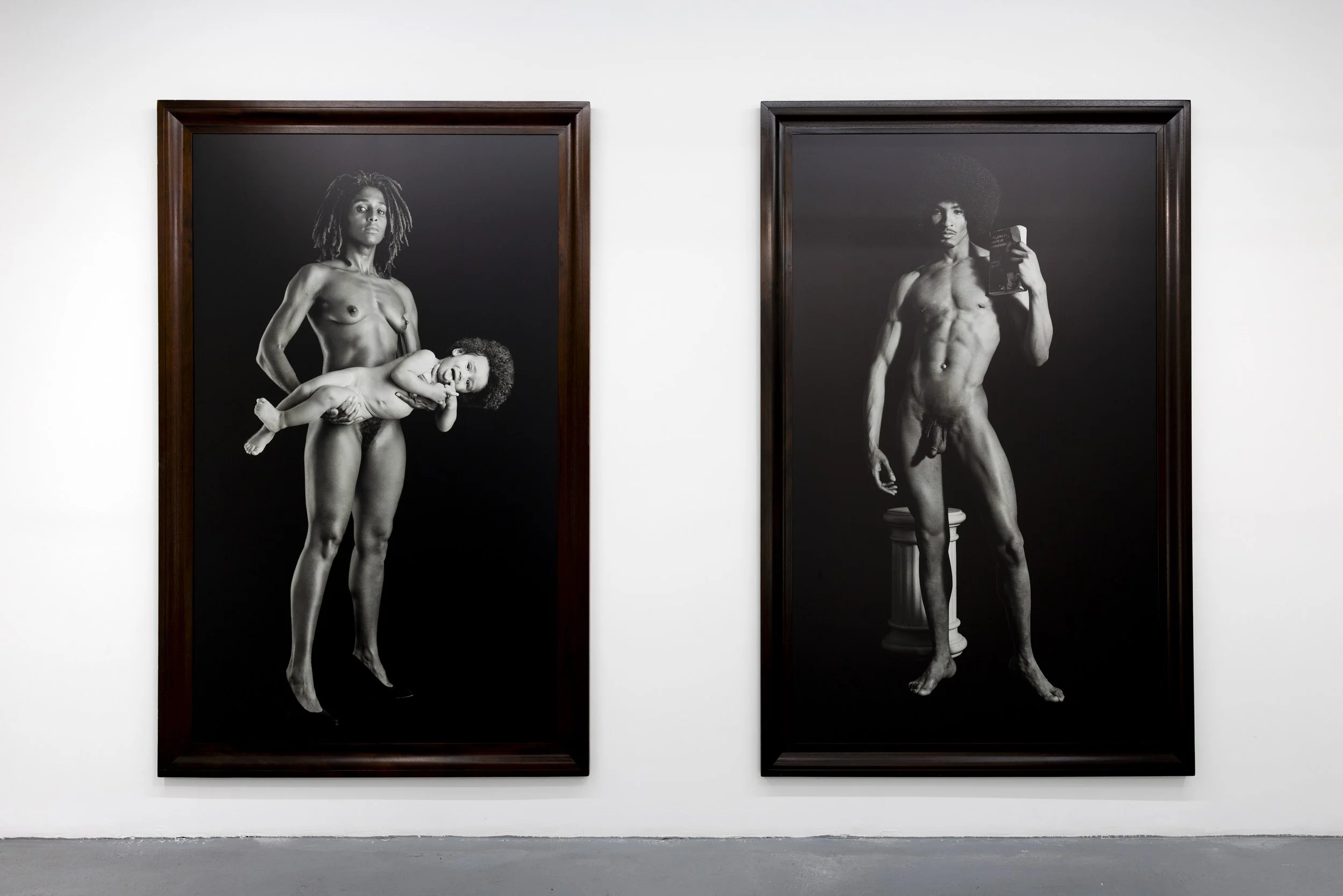
Installation Image, Take A Good Look, 2026 © Renée Cox, Courtesy of Ethan Cohen Gallery
In “Origin” (1993), Cox holds her infant son in one half of a life-size diptych. In the other, a nude male figure echoes Michelangelo’s “David,” holding a book aloft. The two images bring motherhood, masculinity, knowledge and creation into conversation. By presenting maternity at a heroic scale, Cox shifts attention toward a Black woman’s authorship and presence. Her “American Family” series continues this exploration, bringing family photographs into conversation with staged self-portraits. Together, the images consider Cox’s roles as daughter, wife, mother and artist while questioning the expectations attached to each.
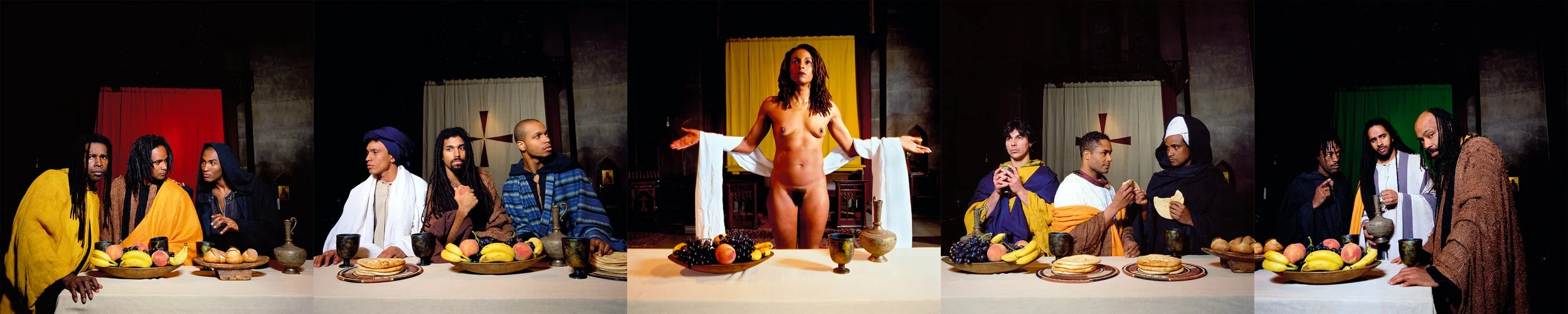
Yo Mama’s Last Supper, 1996 © Renée Cox, Courtesy of Ethan Cohen Gallery
Cox’s reworking of familiar images becomes especially pointed in “Yo Mama’s Last Supper” (1996), a five-panel photograph that recasts Leonardo da Vinci’s biblical scene. Eleven Black men gather at the table while Cox takes the place of Christ, her arms extended. The work asks who is permitted to embody the sacred, and who possesses the authority to make that decision. When the photograph debuted at the Brooklyn Museum in 2001, it prompted public controversy, including criticism from then-New York Mayor Rudolph Giuliani. The response drew attention to a question at the heart of the work: Whose bodies are accepted in images of religious significance?
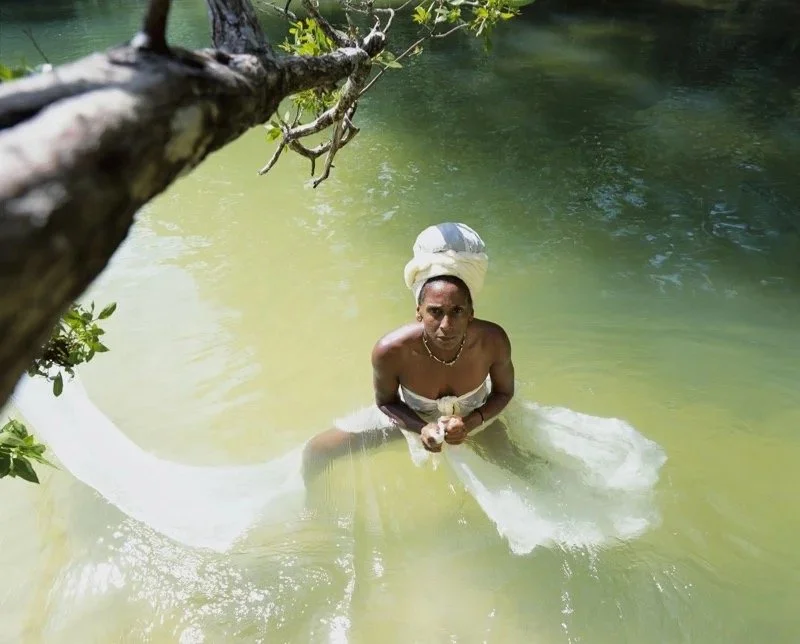
Nanny Washing (From Maroon Series), 2004 © Renée Cox, Courtesy of Ethan Cohen Gallery
Cox also explores Jamaican history in her “Queen Nanny of the Maroons” series. Nanny, an 18th-century leader of the Windward Maroons, is a Jamaican national hero, but few reliable visual records of her survived. Cox uses her own body to give the historical figure a contemporary presence. Rather than presenting Nanny as a single, fixed symbol, the series imagines her as a warrior, strategist, matriarch and woman. The work connects historical memory to performance and the living presence of Maroon communities.
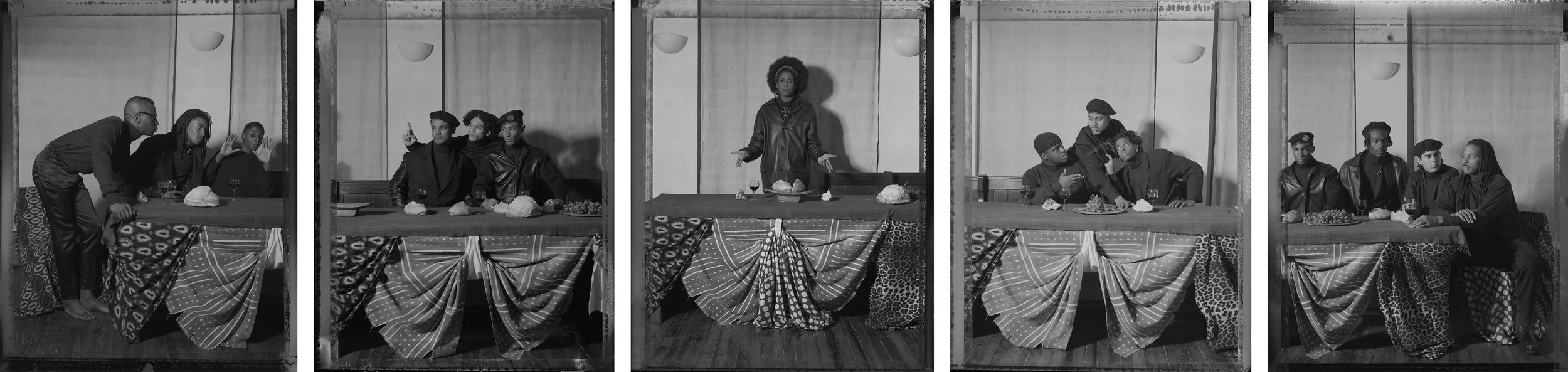
Black Panther Last Supper, 1993 © Renée Cox, Courtesy of Ethan Cohen Gallery
Across the exhibition, Cox returns to the power of images to shape what viewers accept as history. She draws on familiar compositions, then rearranges their positions and meanings. In doing so, she shows how repetition can make one version of the past appear natural or inevitable. “Take a Good Look” offers no single definition of Black womanhood: Cox appears as a mother, Christ, warrior and artist, continually changing the terms of her representation. The title becomes both an invitation and a challenge, asking viewers to look closely, recognize the histories embedded in what they see and reconsider who has the privilege to tell them.
The exhibition is open Tuesday through Saturday from 11 a.m. to 6 p.m. at Ethan Cohen Gallery, 225 W. 17th St., New York.
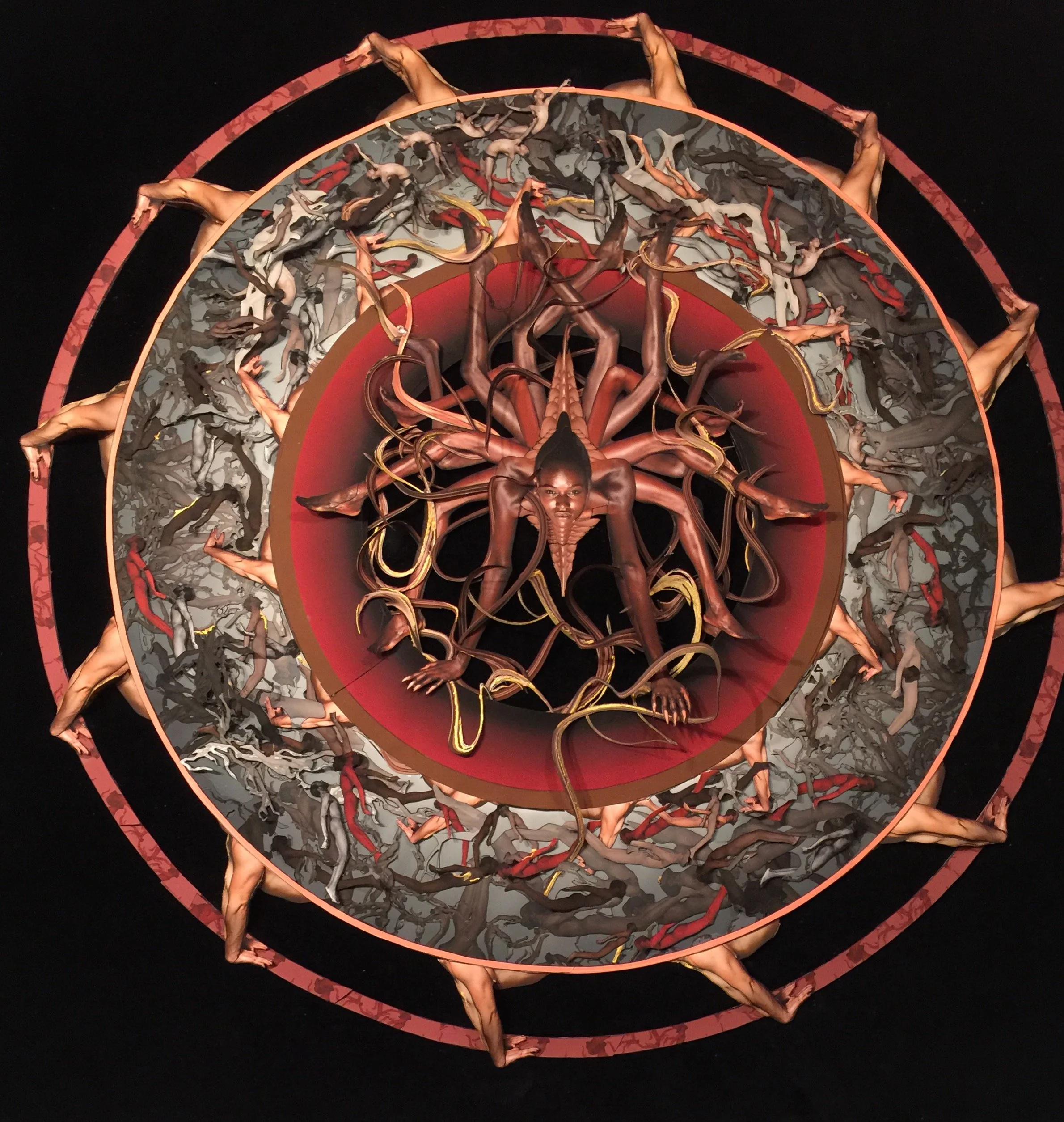
The Ajak Web Cycle, 2016 © Renée Cox, Courtesy of Ethan Cohen Gallery
