

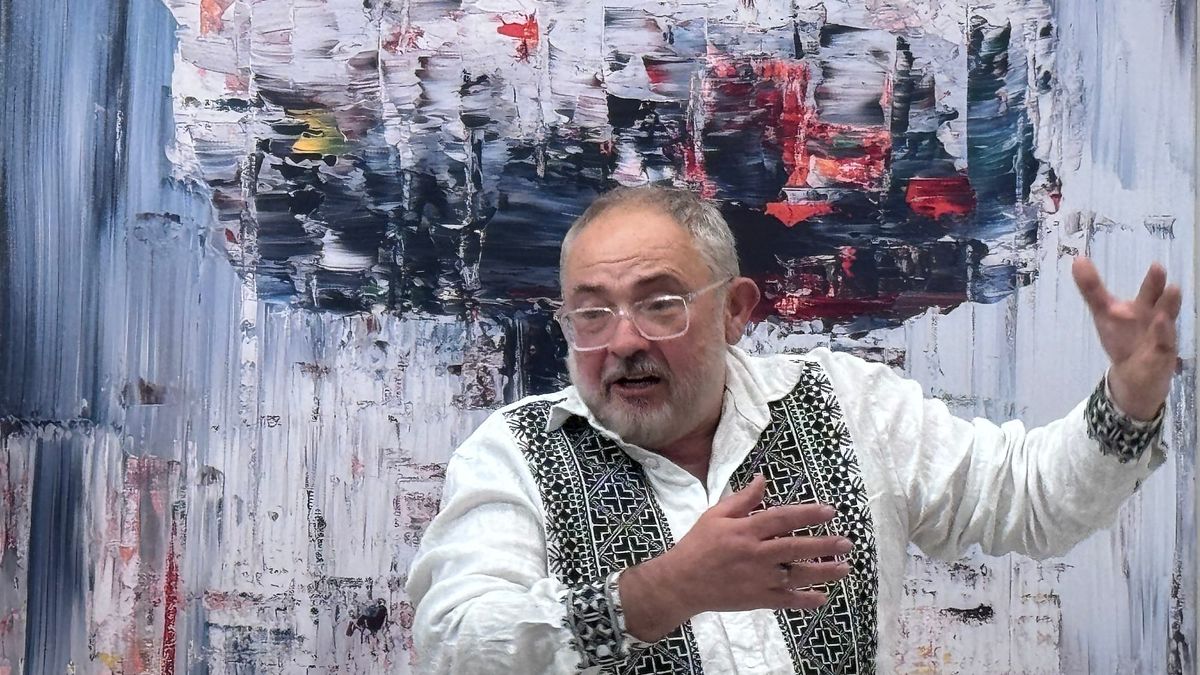
Former Kremlin adviser Marat Guelman, added to Russia’s list of extremists and terrorists in 2024, has opened a new exhibition at Ethan Cohen Gallery built around a stark motif: the atomic bomb mushroom cloud.
The show, titled “First of All, It’s Beautiful,” is on view through May 30 and features works created by Guelman in collaboration with the art group Plus-Minus Komma.
Using artificial intelligence, the group rendered mushroom clouds in the styles of artists ranging from Albrecht Dürer and Rembrandt van Rijn to Jackson Pollock and Andy Warhol. The images are printed using a specialized process that applies low-viscosity acrylic paint, giving the digital compositions a physical, painterly finish.
Guelman, who now lives in Berlin, framed the project as a response to the psychological climate created by Russian President Vladimir Putin’s war in Ukraine and renewed fears of nuclear escalation.
Speaking at the gallery last week, he said a Berlin police official contacted him to offer protection after Rosfinmonitoring, Russia’s financial monitoring agency, labeled him an extremist and terrorist in 2024.
“Maybe I am not first in their list,” he said. “But it is what they like to do—to kill people.”
The exhibition builds on earlier presentations of the work, including a show in Amsterdam co-organized by The Moscow Times under the banner Artists Against the Kremlin. At its core is a deliberate reframing of the mushroom cloud—not as a symbol of terror, but as a subject for contemplation.
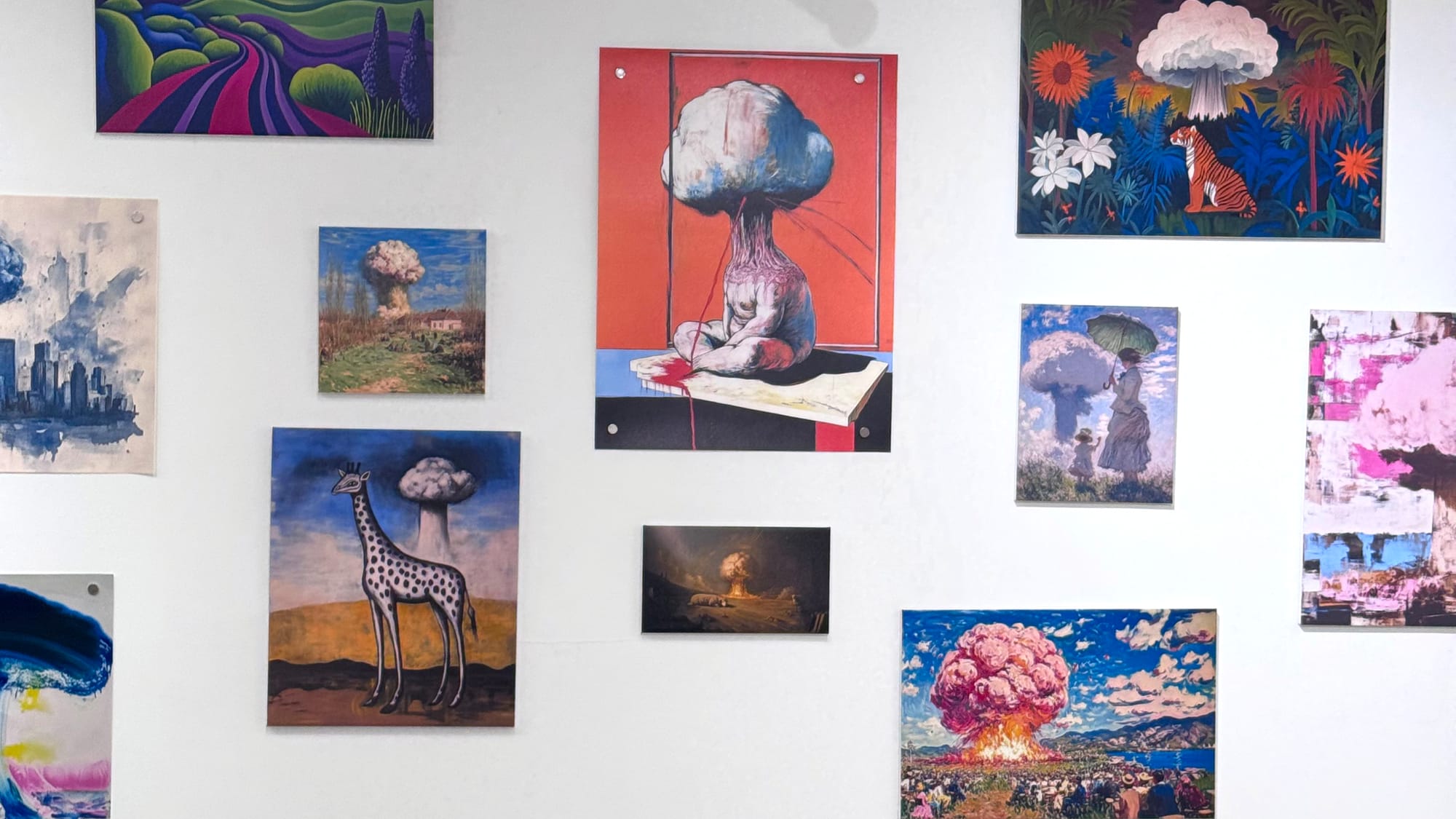 Installation view of Marat Guelman's “First of All, It’s Beautiful" at Ethan Cohen Gallery. Photo by Adam Schrader/Urgent Matter
“Two years ago, when Putin started threatening the rest of the world with nuclear warfare, German journalists and figures started asking me, ‘Is he going to do it? Is he actually going to press the button?’” Guelman said.
“The short answer is yes; he can press that button. He’s a maniac. But I realized if I were to say that to journalists or anyone who was asking me, I would be playing into his game and his fearmongering. He wants for Marat Guelman to be in Berlin saying, ‘Be afraid of Putin. He can press that button.’”
Guelman described the project as rooted in the tradition of memento mori, arguing that modern society must confront existential threats—including nuclear war and artificial intelligence—without succumbing to fear.
“To paint the atomic bomb is to paint a landscape,” Guelman said. “People smile when they look at these works. Every smile is a tyrant losing a bit of his power over society.”
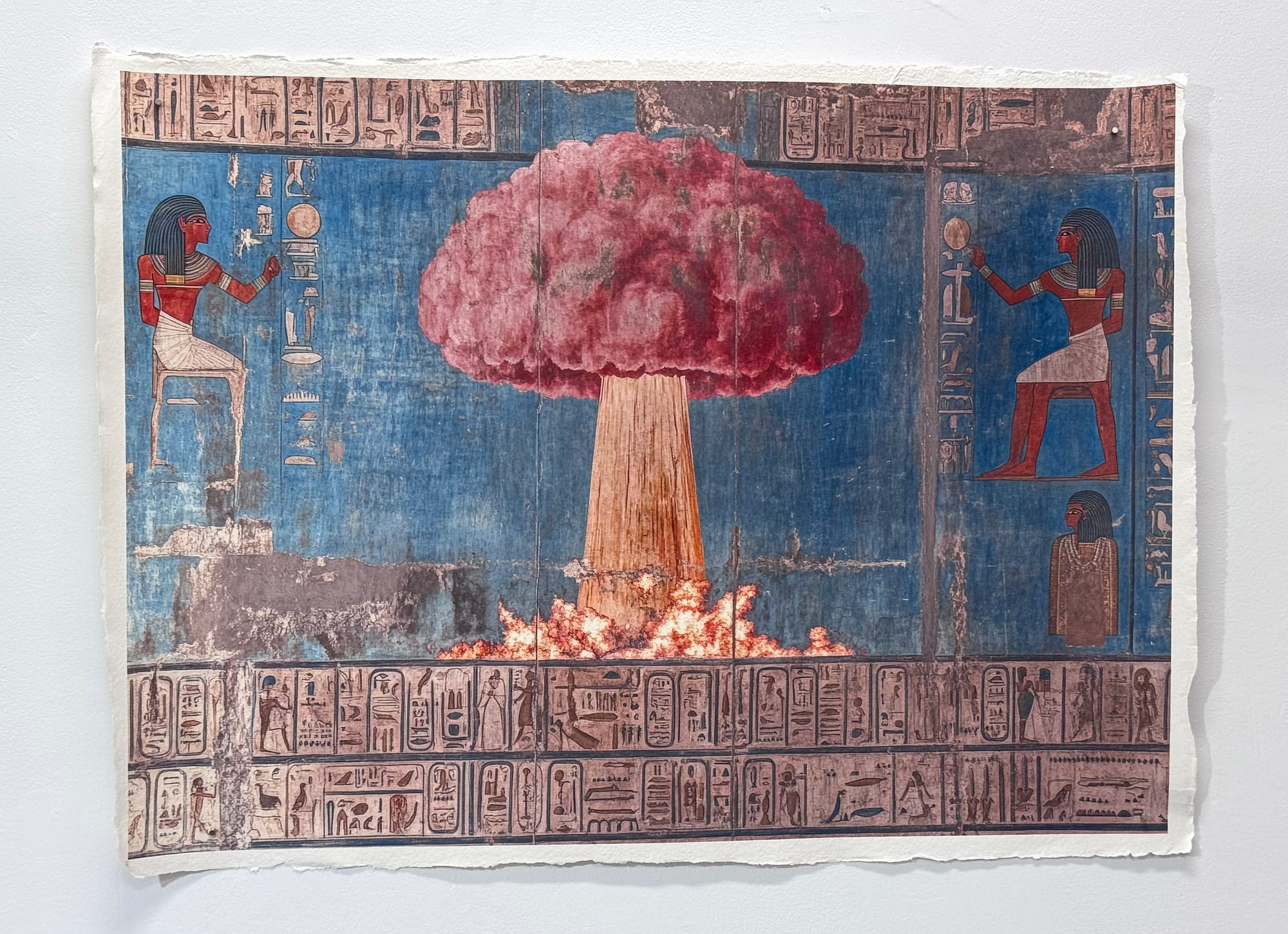 A monoprint on parchment work by Marat Guelman and the Group +-Komma as seen at Ethan Cohen Gallery. Photo by Adam Schrader/Urgent Matter
Guelman himself is a celebrated gallerist who has exhibited Russia’s biggest artists. While introducing him, Cohen recounted attending a 2007 press conference at Guelman’s former Moscow gallery where an opposition leader was scheduled to speak and the gallery was surrounded by secret police.
“During that speech, there were ultra-rightist radicals who stood up and threw books at the opposition leader. And we all thought it was an assassination attempt,” Cohen said. “The entire room hit the floor. And the police rushed in. The entire conference was broken up. And that was just one incident where President Putin was intimidating you.”
Around that time, Garry Kasparov, one of the leaders of The Other Russia, was detained while leading protesters in a march to the historic Pushkin Square, AFP reported. Guelman was later branded a foreign agent by Russia’s Ministry of Justice in 2021, ahead of Russia’s invasion of Ukraine, and put on the Ministry of Internal Affairs’ Federal Wanted List in 2022.
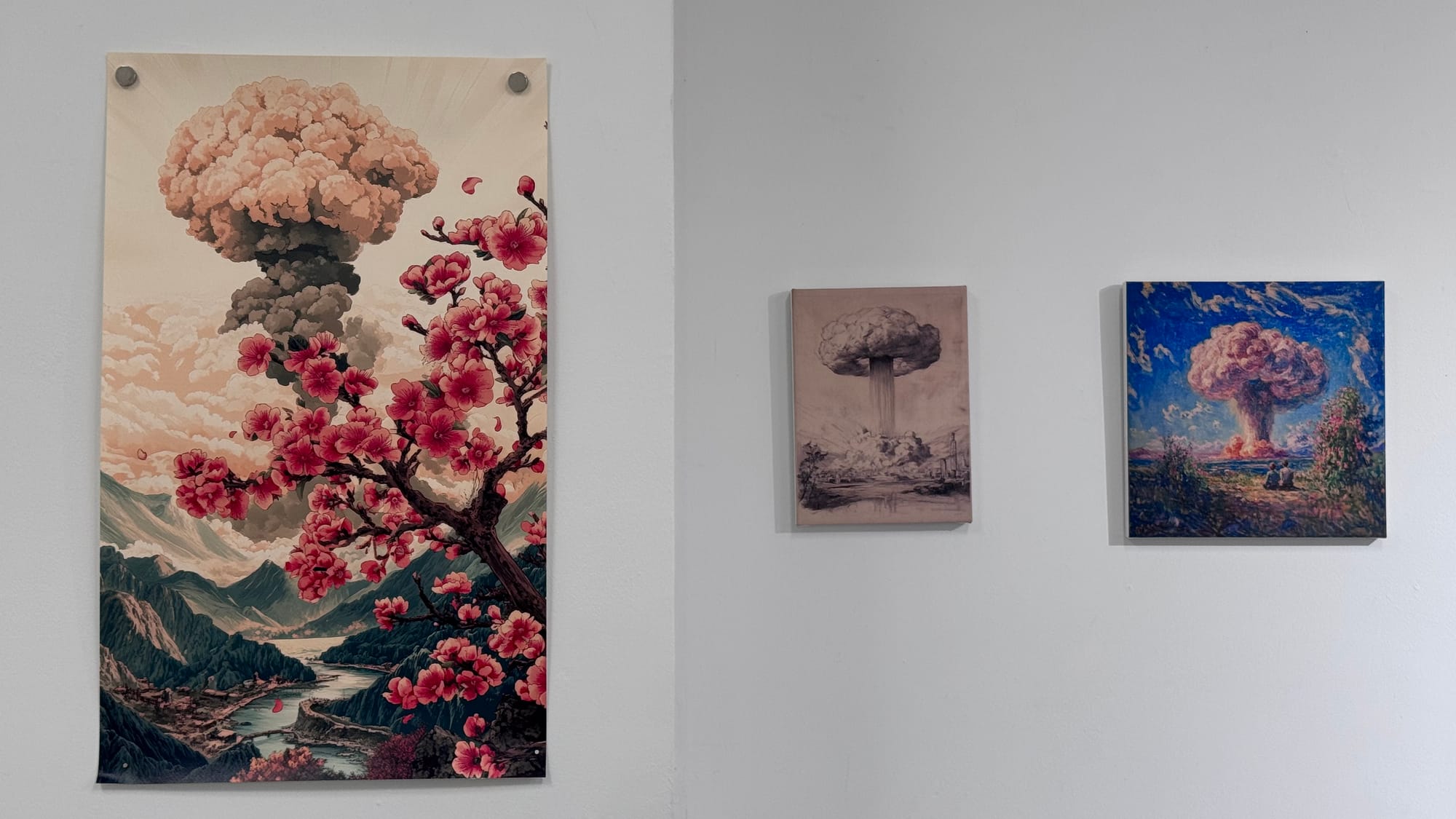 Installation view of Marat Guelman's “First of All, It’s Beautiful" at Ethan Cohen Gallery. Photo by Adam Schrader/Urgent Matter
Guelman described the era when Cohen visited Russia as “beautiful times” when people “were still able to protest” and “there still was a way to fight the regime.” Even as recently as 2019, he gave a gift to Russia’s state-owned Tretyakov Gallery, when there was still a sense, he said, that things could be turned around. That ended with the war in Ukraine.
However, Guelman said there is growing discontent among Russia’s ruling class over the war and its cost on their wealth. He anticipated that pressure could lead in an end to the war by the fall.
“Maybe half a year ago, if you were close to Putin, it means you can have more money,” he said. “Now, if you are close to Putin, you lose money—not only because of the sanctions, but because Putin has no money; he's asking for money for the war.”
Cohen said that he organized a show last summer in Basel, Switzerland, in which he invited other galleries and curators to take over a 13th century house—giving artists a solo show in each room. He exhibited Guelman’s works in that show, which he called “very successful,” but said he now better understands his artistry.
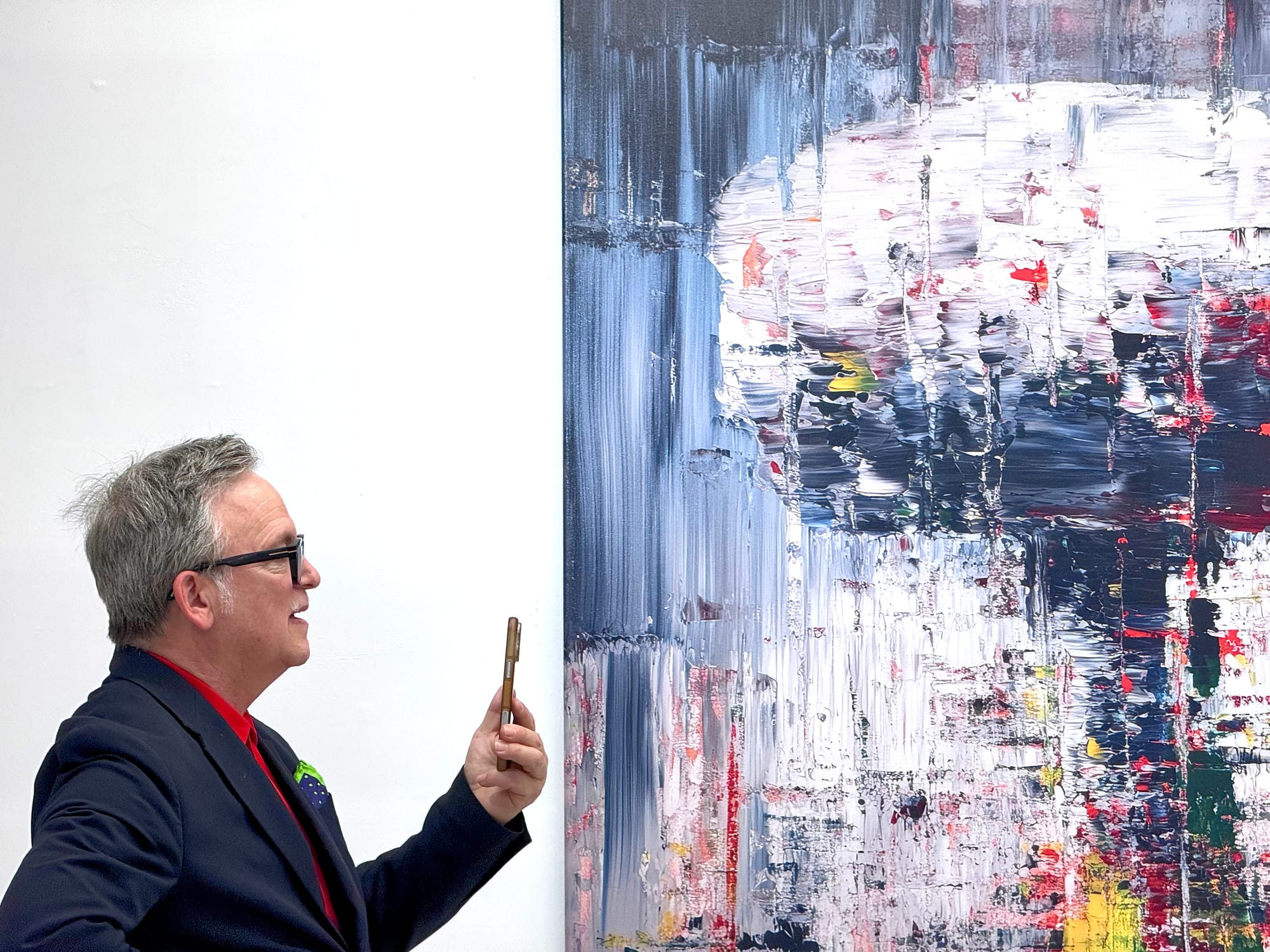 Gallerist Ethan Cohen is pictured in conversation with Marat Guelman at his gallery. Photo by Adam Schrader/Urgent Matter
“For example, this is his own synthesis between Rothko and Andy Warhol. So, it's his own style,” Cohen said, as he pointed to specific artworks throughout the show. “But some of them are very obvious. Like, this is more like a Jackson Pollock or that is like a Lichtenstein. But there's an atom bomb in the background. It's beautiful.”
The production process underscores the collaboration between artist and machine. Guelman’s team works with a custom platform based on Stable Diffusion, trained specifically on imagery of nuclear explosions. While he said the system allows for multiple variations of a single composition, each printed work is treated as a distinct piece.
For this project, he chose not to intervene manually after printing—an intentional decision to foreground the role of artificial intelligence.
“This is the last postmodernist project,” he said. “A.I. closes this page in art history.”
